

Bares, qué lugares (matemáticos)

Los bares, que lugares
Tan gratos para conversar.
No hay como el calor
Del amor en un bar.
Gabinete Caligari: “Al calor del amor en un bar”
Divulgar la ciencia está de moda, nunca ha habido tantos científicos y periodistas dedicados a la tarea, y hasta han surgido los profesionales dedicados a la tarea y que se califican como “divulgadores”. Bienvenidos sean. Y los formatos se han diversificado. Hemos pasado de los artículos en revistas especializadas y prensa escrita, de los libros y de algunas aventuras de radio y televisivas, de los museos, a poder utilizar los nuevos medios digitales y el universo que nos ofrece internet. Y esto último es lo que ha permitido esa expansión de divulgadores.
 Pero no hemos todavía terminado de explorar todas las posibilidades. Y hemos descubierto un terreno inédito: los bares. ¡Qué mejores lugares para hablar de ciencia! De ciencia y de matemáticas, que son ya parte indispensable del menú.
Una de las iniciativas más popular es el festival The Pint of Science, que busca impartir charlas cortas en formatos accesibles al gran público en bares y pubs. Es un programa totalmente voluntario, que fue puesto en marcha por un grupo de investigadores pre y postdoctorales en 2012. Ese año, Michael Motskin y Praveen Paul, investigadores postdoctorales del Imperial College London, en el Reino Unido, organizaron un evento llamado “Meet the Researchers”. Llevaron a personas afectadas de Parkinson, Alzheimer, y otras enfermedades neurológicas, a sus laboratorios para que vieran de primera mano la investigación que hacían. Y pensaron, ¿por qué no hacerlo al revés, ir nosotros a la gente? Así nació Pint of Science.
Precisamente este año se celebrará estos tres días de mayo, del 14 al 16, en once países europeos (también en España, ¡será por bares y científicos!), en tres países de Asia y Australasia, seis países en América y en Sudáfrica; en total, 21 países.
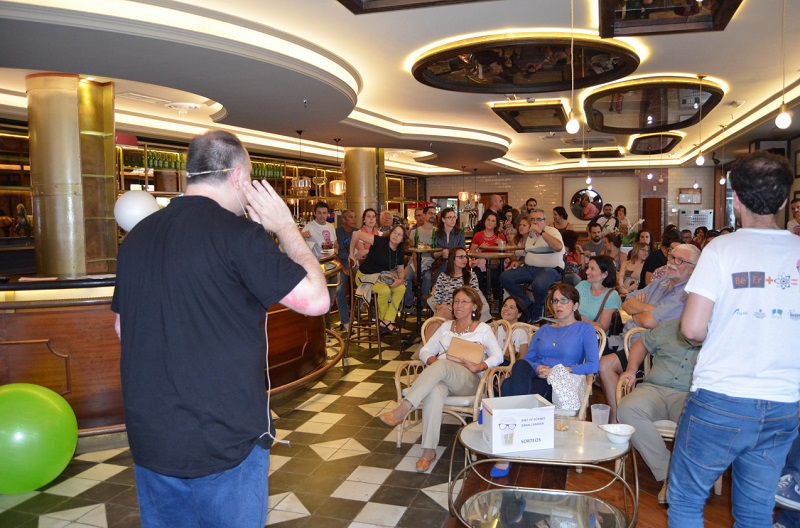
Pero esta no es la única iniciativa. Últimamente, han proliferado los Cafés Científicos, Ciencia en el Bulebar (en miércoels alternos, aunque también estarán en The Pint of Science), etc. Mi amiga y colaboradora Elena Vázquez Abal nos contaba que en muchas ocasiones, las charlas que hacían en sus cafés científicos no eran anunciadas, se sorprendía al público con las tazas de café en las manos y la mayoría de clientes aceptaba el espectáculo con agrado.
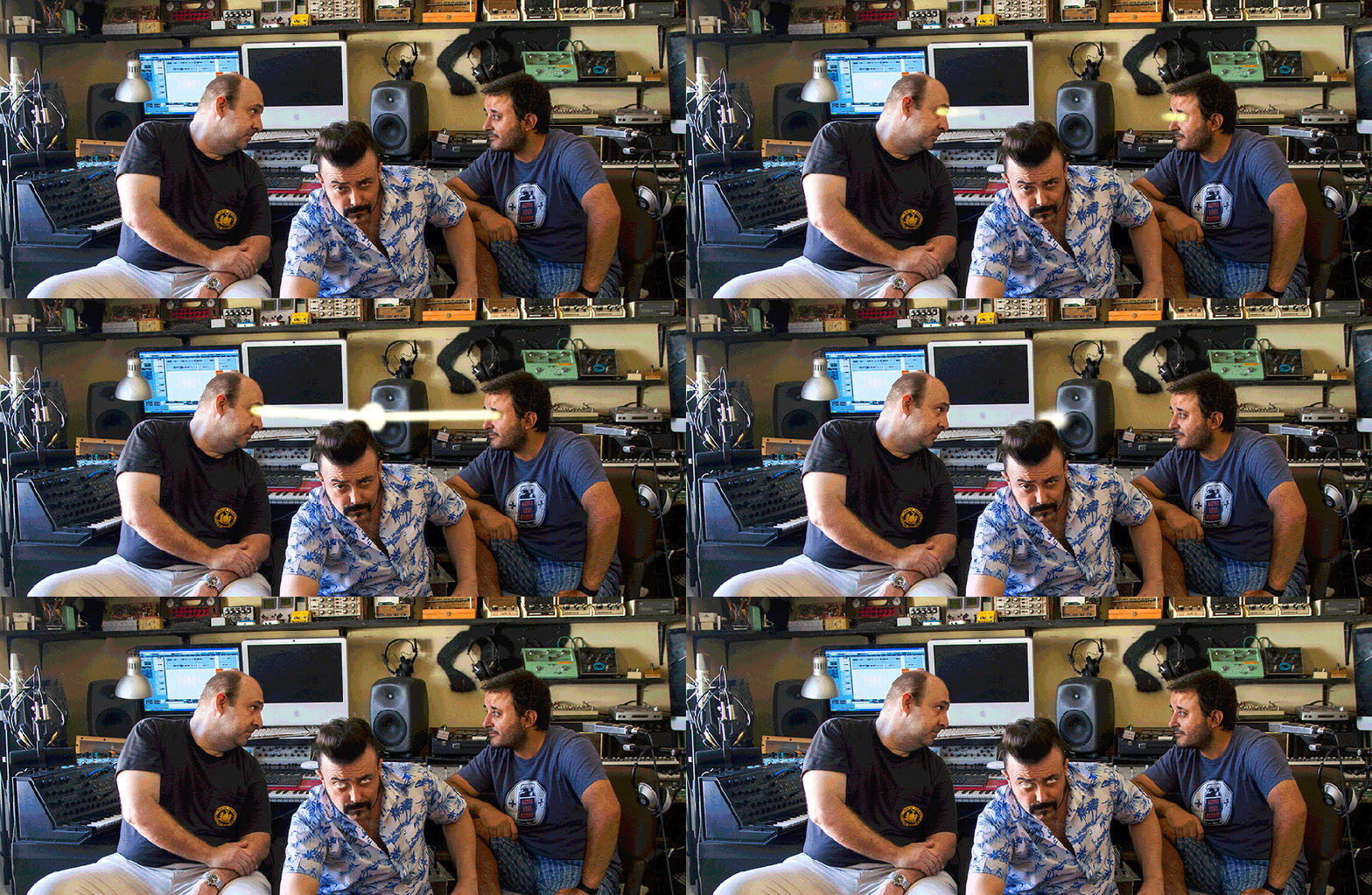
Otra iniciativa llamada también Ciencia en el Bar, consiste en pequeñas piezas audiovisuales donde se explican conceptos científicos de forma sencilla, presentados por Joaquín Sevilla, profesor titular de Tecnología Electrónica en la Universidad Pública de Navarra, y Javier Armentia, coordinador del Planetario de Pamplona.
Todo vale para hablar de ciencia, y con una cerveza o un café en la mano, mejor todavía.
[youtube]https://www.youtube.com/watch?v=JF0JIUUoJvU[/youtube]
____
Manuel de León (CSIC, Fundador del ICMAT, Real Academia de Ciencias, Real Academia Canaria de Ciencias, ICSU).
Manuel de León’s piece about the “mathematical” side of bars really made me smile—especially the opening nod to Gabinete Caligari’s “Al calor del amor en un bar.” He’s right that science communication has exploded beyond traditional channels, and the informal setting of a bar or café is perfect for making complex topics feel approachable. I was fascinated by the origin story of Pint of Science: Michael Motskin and Praveen Paul started with “Meet the Researchers,” bringing people affected by Parkinson’s and Alzheimer’s into labs, then flipped the model and took the researchers to the pub in 2012. That reversal is such a smart way to break down the public–researcher barrier.
The mention of Elena Vázquez Abal’s surprise coffee-shop talks also stood out. Serving science without announcement, while people hold their cups, proves that the public is curious when the format is low-pressure and human. I’d love to know whether these casual formats change the questions people ask compared with a formal lecture—do they feel freer to challenge or misunderstand?
It also got me thinking about how audiences engage with stories and puzzles in unexpected places. Immersive fiction can have a similar effect: a game that hides its lore in character interactions and route choices creates the same kind of “accidental discovery” as a café scientific talk. If you enjoy unpacking hidden narratives, the Freak Circus guide at https://freak-circus.com is a great companion for that visual novel/horror game, covering character routes, endings, and secrets. It’s a different flavor of curiosity, but both spaces show that learning and discovery thrive when the setting feels inviting rather than intimidating.
What a charming premise — that bars, with their warmth and easy conversation, can become classrooms for mathematics and science. I love how the post opens with Gabinete Caligari’s lines: “Tan gratos para conversar / No hay como el calor / Del amor en un bar.” That sets the perfect tone for the idea that science outreach doesn’t have to happen in lecture halls.
The article’s point about the explosion of formats really resonates. We’ve moved beyond journals and museums to digital media, and now to pubs and cafés. The Pint of Science origin story is especially compelling — Michael Motskin and Praveen Paul flipping the “Meet the Researchers” model and asking, “Why not go to the people instead?” Taking Parkinson’s and Alzheimer’s patients into labs first, then bringing researchers into bars, shows how trust and accessibility matter as much as the content itself.
I was also glad to see Spanish initiatives like Ciencia en el Bulebar and the audiovisual “Ciencia en el Bar” with Joaquín Sevilla and Javier Armentia mentioned. Embedding that YouTube video at the end is a nice touch — short, digestible science clips are exactly the kind of material that can travel far beyond the bar stool.
One thing I wonder: do you think these informal settings actually change public perception of mathematics specifically? Bars seem ideal for
By the way, I found some related content on my site that might interest you: https://repeater.online/
What a wonderful post! I had never thought of bars as classrooms, but your opening lines from Gabinete Caligari’s *“Al calor del amor en un bar”* perfectly set the mood: a relaxed, familiar space is exactly where science and math can stop feeling intimidating. You note that *divulgar la ciencia
By the way, I found some related content on my site that might interest you: https://itreachesguide.com